
Tag: buteyko instructor

  • Buteyko Breathing: A Powerful Wellness Practice You Haven’t Tried

    Buteyko Breathing: A Powerful Wellness Practice You Haven’t Tried

    Why How We Breathe Matters

    That was a question that Dr. Konstantin Buteyko asked when he was training to become a doctor in 1950s Russia. (If you don’t like science, feel free to skip to the next subheading.) He noticed that the more ill people were the more they seemed to breathe and the less oxygen they seemed to get. This didn’t seem to make sense until he thought about something called the Bohr Effect.

    Simply put, the Bohr Effect is a scientific principle that an increase in arterial CO2 decreases blood pH, which weakens the chemical bond between hemoglobin and oxygen. This means that it is vital to have enough CO2 in the blood so that hemoglobin can let go of the oxygen molecules and get them to where they need to go – the organs, muscles, and cells.

    Dr. Buteyko theorized that one of the reasons that patients were becoming more ill was actually because of breathing more. He posited that conversely, health could be improved by breathing less. At that time, he was dealing with seriously high blood pressure. He developed exercises to train his body to breathe less and was able to cure himself of his high blood pressure. After finishing medical school, he went on to develop his method and eventually catalogued over 200 different diseases that respond well to the breathing method that was named after him, the Buteyko Breathing method.

    What is Buteyko Breathing?

    So, what does the method actually involve? It involves exercises done several times per day which slowly train the body to breathe less and to reset to a new, healthier level of carbon dioxide. Our bodies love to maintain homeostasis or the status quo, as anyone trying to lose weight has experienced. Additionally, breathing is both a conscious and unconscious function, which originates from part of the brain stem. Because of the autonomic or automatic side of breathing, it’s impossible to just force the body to breathe differently. It takes gentle and consistent practice. A Buteyko Breathing Instructor is trained in assisting students to learn and implement the method, customizing it to their specific needs and health conditions. Over time, this new pattern of breathing becomes automatic, with resulting health improvements.

    After the fall of the Soviet Union, the Buteyko Breathing method was slowly introduced to the Western world. More and more people have tried it and have seen the incredible improvements in their health. What health conditions can it help? Dr. Buteyko chronicled over 200, but a few are:
    Since it also improves athletic performance and general well-being, the Buteyko Breathing method can benefit a wide variety of people. That might sound too good to be true, but the reason that it can help most people is because of what we talked about earlier―the potential to use oxygen more efficiently in the body when proper carbon dioxide levels are restored.

    And what about carbon dioxide? Most people are taught that carbon dioxide is just a garbage gas we breathe out, only good for plant life. But modern science has proven that is just not true. Consider some of the benefits of carbon dioxide:

    •       Vasodilation 1—This is when the blood vessels relax and the internal diameter increases. This means more blood goes to our hearts, brains, and other vital organs. Also, it takes less effort to pump blood through a larger tube, so this leads to less work for the heart, which in turn can lead to a reduced resting heart rate and blood pressure.

    •       Bronchodilation 2—If this term is familiar, that’s because a type of asthma inhalers are called bronchodilators. Dilated or enlarged bronchial tubes are relaxed and easy to breathe through. This is why so many asthmatics have seen dramatic and quick improvements in their asthma symptoms when doing Buteyko.

    •       Nerve Stabilization 3,4 —Carbon dioxide is a powerful natural sedative, in other words it helps relax the brain and nerves so that they are not so excitable. Oxygen itself is also a calming agent. So the combination of normalized levels of CO2 and Oxygen can decrease anxiety, stress, and even seizures.

    •      Improves Immune System 5—In addition to the fact that nasal breathing and breathing less decreases the number of harmful microbes we breathe in, Buteyko breathing promotes calm, measured breathing, which can help the body not to be stuck in the fight or flight mode. This is one reason that Buteyko strengthens the immune system, as being frequently in the fight or flight mode is known to weaken a person’s immune system.

    •       Muscle Relaxation—Since carbon dioxide increases oxygen delivery to the muscles, decreases sympathetic dominance (fight or flight), as well as calms down the nerves, it can cause tense and painful muscles to relax.

    So, are you wondering: “if this method is so great, why haven’t I ever heard of it?” Great question. As Arthur Schopenhauer said: “All truth passes through three stages. First, it is ridiculed. Second, it is violently opposed. Third, it is accepted as being self-evident.” This method is new in the Western world and the idea that how we breathe is important is unfamiliar for many people. This doesn’t make it any less true or potentially life-changing. Why not be brave and learn more, maybe even give it a try?

      Korina, Buteyko Breathing Instructor and Respiratory Therapist

          References:

    1. https://www.normalbreathing.com/co2-vasodilation/

    2. https://www.atsjournals.org/doi/abs/10.1164/ajrccm-conference.2012.185.1_MeetingAbstracts.A2848

    3. Zahra Mohamed Hassan, Nermine Mounir Riad, Fatma Hassan Ahmed, Effect of Buteyko breathing technique on patients with bronchial asthma, Egyptian Journal of Chest Diseases and Tuberculosis, Volume 61, Issue 4, 2012, Pages 235-241, ISSN 0422-7638, https://doi.org/10.1016/j.ejcdt.2012.08.006.

    4. Tolner EA, Hochman DW, Hassinen P, Otáhal J, Gaily E, Haglund MM, Kubová H, Schuchmann S, Vanhatalo S, Kaila K. Five percent CO₂ is a potent, fast-acting inhalation anticonvulsant. Epilepsia. 2011 Jan;52(1):104-14. doi: 10.1111/j.1528-1167.2010.02731.x. Epub 2010 Sep 30. PMID: 20887367; PMCID: PMC3017646. https://www.ncbi.nlm.nih.gov/pmc/articles/PMC6309867/

    5. Bucsek MJ, Giridharan T, MacDonald CR, Hylander BL, Repasky EA. An overview of the role of sympathetic regulation of immune responses in infectious disease and autoimmunity. Int J Hyperthermia. 2018;34(2):135-143. doi:10.1080/02656736.2017.1411621. Five percent CO₂ is a potent, fast-acting inhalation anticonvulsant – PubMed (nih.gov)
  • #1 Proven Way to Prevent Asthma Symptoms Naturally

    #1 Proven Way to Prevent Asthma Symptoms Naturally

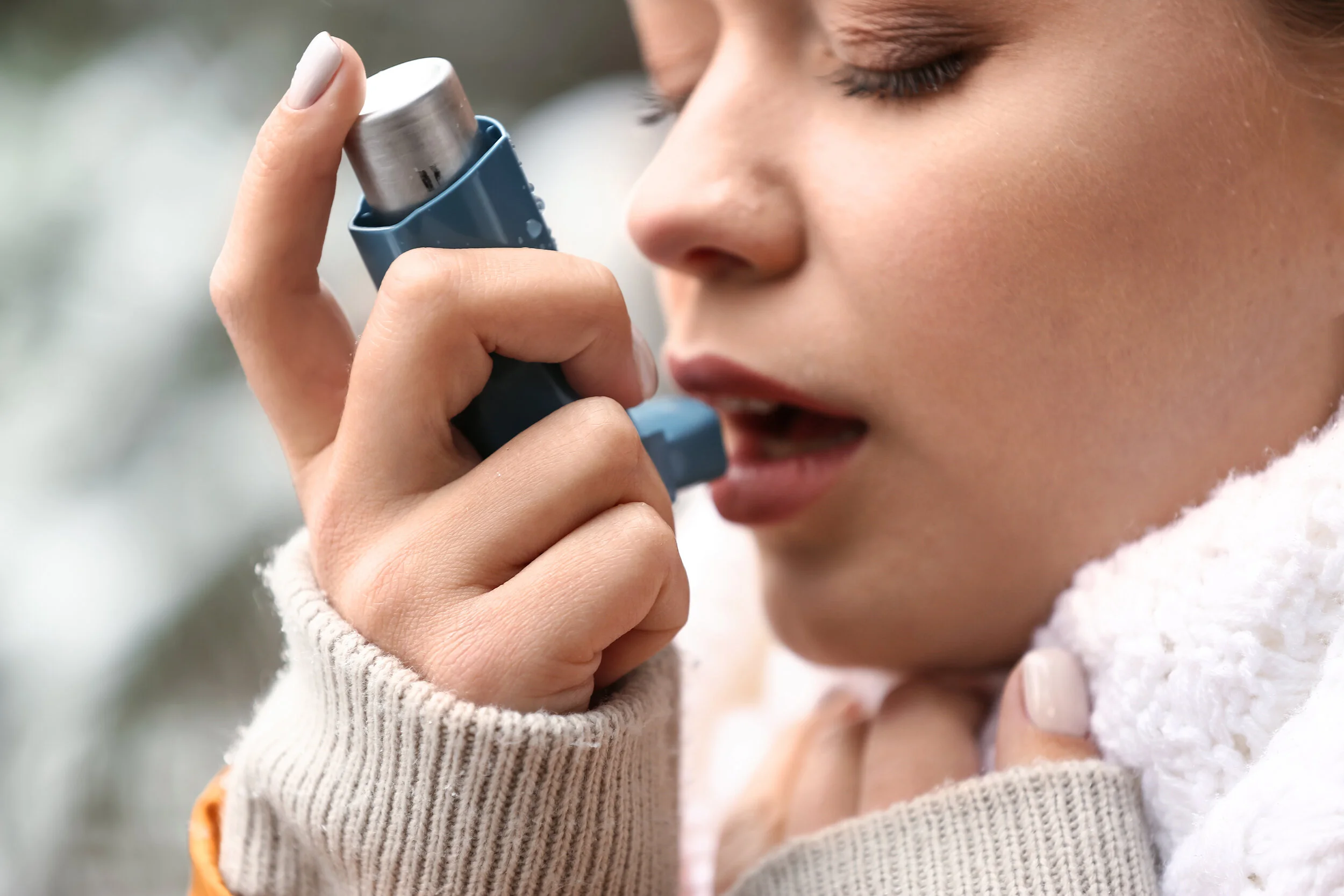
    Have you ever experienced the feeling of not being able to breathe? If you haven’t – be glad. If you have asthma, though, it’s a far too familiar feeling. Sometimes it feels like there is a big brick on your chest, like every breath is a struggle, or like you’re a fish out of water and you just can’t catch your breath. Added to that is the fear, constantly having to carry an inhaler since you don’t know what will set you off and when. The exhaustion – when every breath is a challenge, it just wears you out. Or the stigma – having to take your inhaler or nebulizer in front of others who don’t understand or are freaked out that you can’t catch your breath or stop coughing.

    I’ve had asthma since I was a kid, so I don’t have to guess how this feels. I’ve lived it. That’s why I was initially attracted to becoming a Respiratory Therapist since they were the healthcare heroes that helped me breathe when I was a kid. After becoming a Respiratory Therapist, however, even though I could teach you how to take your inhaler properly, I realized I didn’t have any better idea than before on how to help myself breathe better. That is, until I tried Buteyko Breathing (more to come on that).

    How Asthma Affects Breathing

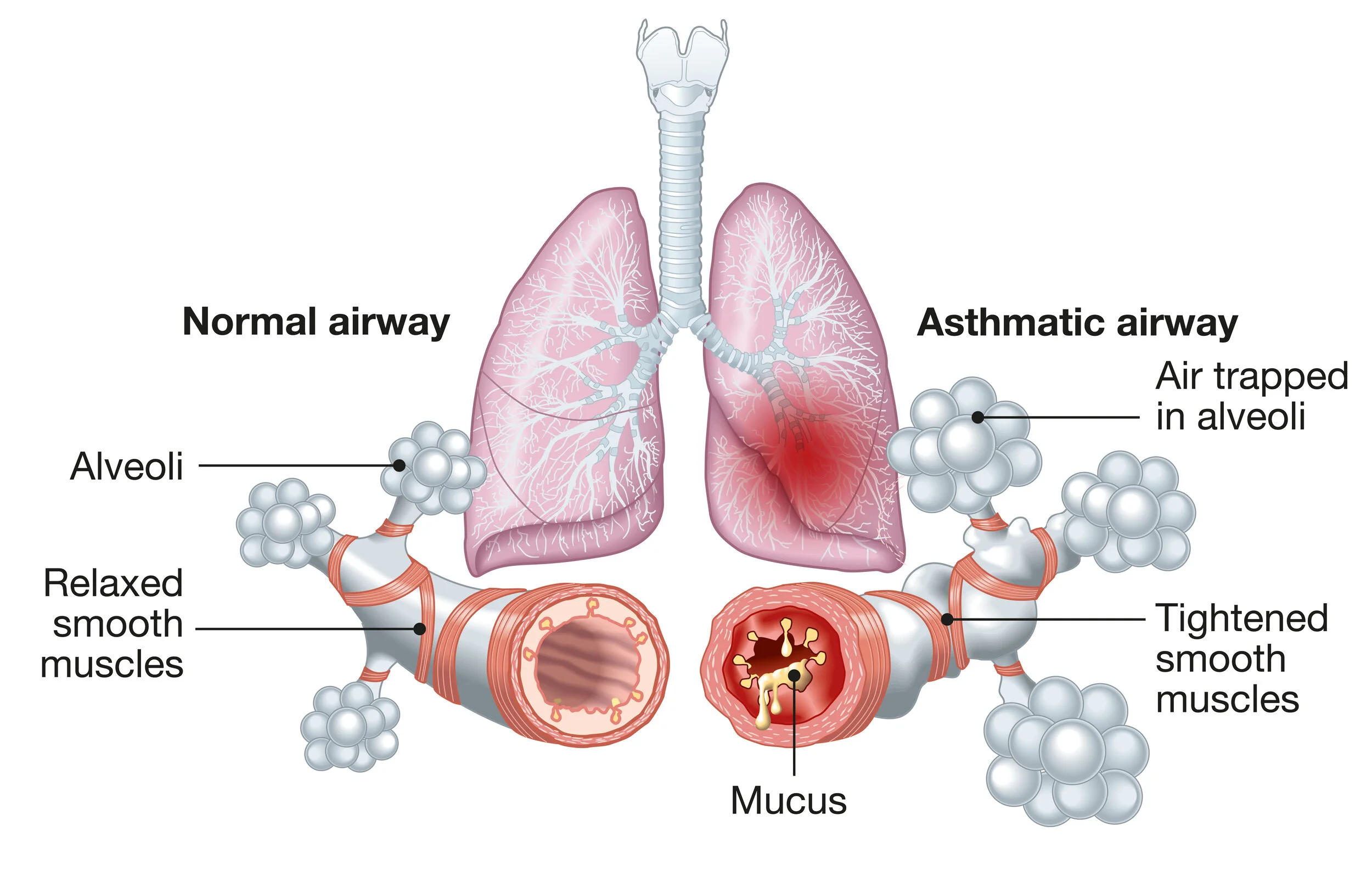
    But first, what exactly is asthma? It is a chronic disease which causes the airways in the lungs, the bronchial tubes, to constrict. The constriction is due to three processes:

    1.       Smooth muscle constriction: asthma causes the smooth muscle around the airways to contract, which reduces the size of the tube. Smooth muscle is also called involuntary muscle and, as indicated by the name, we don’t have conscious control over this type of muscle.

    2.       Airway inflammation: the bronchial tubes become inflamed and swollen, which further narrows them— imagine trying to breathe through a straw that is getting smaller and smaller. Think about the last time you had an injury and how swollen that body part was. That same process of inflammation happens inside the airways in asthma.

    3.       Sticky mucus: irritated and inflamed airways produce sticky mucus, which makes the diameter of the airways even smaller until it is coughed out. This mucus can stimulate coughing, which itself can irritate the already inflamed airways and it’s hard to push the mucus out through the tight bronchial tubes.

    Sounds like a perfect storm, doesn’t it? All this combines to make it hard to get air in and out, which can cause shortness of breath and panic.

    We don’t know exactly what causes asthma or why some people have it. We do know that it often runs in families, so there can be a genetic factor. Asthma symptoms are triggered by certain factors and they can vary from person to person. For instance, asthma can be triggered by exercise, weather changes, respiratory infections, stress, or allergies. You can have from one asthma trigger up to all of them. Asthma commonly begins in childhood, but there is also adult-onset asthma. Asthma severity can range from irritating and unpleasant all the way to life threatening.

    According to the Asthma and Allergy Foundation of America, in America about 25 million people have asthma1. That’s a mind-boggling figure, isn’t it! Not only is uncontrolled asthma potentially dangerous, landing people in the Emergency Room, over time it can cause long term damage, called airway remodeling, which is definitely not fun like remodeling your home!

    So, how is asthma traditionally controlled? The focus is typically on three areas:

    1. Avoiding triggers. Whether your trigger is an allergy or exercise, traditional management of asthma recommends avoiding these triggers. Sometimes this works okay, like if you have a cat allergy you can choose not to have a cat. But it’s challenging to impossible for others. For instance, if you have exercise induced asthma, it’s not a healthy option to avoid exercise.

    2. Reducing inflammation. This is done in two ways, the first with steroid treatment, called corticosteroids. These steroids are typically given by means of an inhaler, but in severe asthma or for an asthma flare up, oral steroids may be prescribed. Side effects can be less severe with inhaled corticosteroids than oral corticosteroids, but they include oral thrush (a yeast infection in the mouth and throat), hoarseness or sore throat, cough, or weight gain2. The side effects of oral steroids are more serious, especially when they are taken for a long period of time, including mood swings, weight gain, high blood pressure, diabetes, osteoporosis, and others.

    3. Bronchodilation. Bronchodilators are a class of medications that dilate, or widen, the bronchial tubes. There are both short-acting bronchodilators, like albuterol, and long-acting bronchodilators. The short-acting bronchodilators can quickly stop an asthma attack, but the effects wear off quickly, within hours. They are often called rescue inhalers, as they can quickly rescue a person from an asthma attack. Long-acting bronchodilators can work for 12-24 hours, depending on the medication. These drugs are not without side effects either, including increased heart rate, tremors, nausea, dry mouth, and headache. They can make you feel like you had way too much coffee, especially the short acting version. Some controller inhalers combine both an inhaled steroid and a long-acting bronchodilator.

    When Asthma Inhalers Don’t Work

    Despite these advanced medical treatments, asthmatics typically are given an asthma plan. This is a written plan from their doctor on what to do when their asthma gets worse.

    Asthma action plans are great in that they help asthmatics know when to escalate their treatment and when to get help. But they showcase a glaring flaw in the current treatment of asthma— asthma action plans assume that there are times when the current treatment is not fully going to work and your asthma will get worse.

    So, if you have asthma, it is natural to explore ways to prevent these symptoms from happening in the first place. I’ve been there. As I mentioned, I’ve had asthma since I was a kid and was disabled by it in adolescence. It got better in my teens, but then reared its ugly head again in my mid 20’s. By the time I was in my late 20’s, I was spending time in the Emergency Room and hospital again. I took my long-acting bronchodilators and corticosteroids faithfully, but my asthma just kept getting worse. I felt hopeless and panicked. I then tried the natural route, energy medicine, herbs, salt inhalation therapy, and homeopathy. I got a little better, but I was still short of breath much of the time and especially when I exercised. Then my medical doctor suggested trying Buteyko breathing and I haven’t had to take any asthma inhaler even once since I started practicing it. Read my story.

    Don’t get me wrong – asthma medications save lives every day. They have saved my life in the past, so I’m not criticizing them at all. It’s just that they don’t address the root problem, which for many is breathing too much, or over-breathing.

    Natural Asthma Relief

    The theory behind the Buteyko (Boo-tay’-koh) breathing method is that breathing too much, or over-breathing, can cause or worsen a number of health problems, including asthma. At first this may seem odd but if you think about it, what happens if we do anything too much, i.e., drink too much, eat too much, exercise too much, etc.? Why would breathing too much be any different?

    When we over-breathe, we lose too much of the gas carbon dioxide. Many people think of carbon dioxide as a waste gas that we breathe out, basically just garbage. That couldn’t be farther from the truth. Our bodies use carbon dioxide for a number of important processes, including unloading oxygen from our red blood cells to our tissues and organs.

    Additionally, carbon dioxide acts as a bronchodilator in the airways! Remember we talked about medications that are bronchodilators, that increase the size of our airways? Well, having the proper amount of carbon dioxide in the lungs serves the same purpose, but without any side effects! This effect has been demonstrated in a number of animal studies3. And asthmatics who practice Buteyko breathing can feel the effect for themselves. Learn more about the Buteyko method.

    Does Buteyko Breathing cure asthma? No, if you resume breathing too much the asthma symptoms come back. However, with continued practice it does control asthma without drugs! People who practice Buteyko start to feel more control over their breathing. Then, asthma symptoms like wheezing, shortness of breath, and cough start to become less frequent and less severe, eventually leading to needing less medication (of course, any medication changes should be done under the supervision of a doctor).

    What is involved with the method? It is a non-invasive method that incorporates breathing exercises that retrain your body to stop over-breathing. It is advisable to take an instructor-led Buteyko course, as asthmatics typically find it much easier to learn the method comfortably under the guidance of an experienced Buteyko instructor. Since the Buteyko method helped me so much, it seemed the natural next step to become an instructor, especially with my background as a Registered Respiratory Therapist. I teach the Advanced Buteyko Method, which utilizes a convenient app to do and track the breathing exercise sessions and ongoing progress. The lessons are conducted virtually from the convenience of your own home.

    How can you know if you can benefit from the Buteyko breathing method? The Buteyko breathing method incorporates an easy breathing test you can do yourself. Learn how to do it and interpret your results by watching this video.

    You can also learn more about the Buteyko method and how it can help you by scheduling a free consultation with me. During this free half-hour virtual session, you’ll meet me and have an opportunity to ask me any questions you have about the method or the course.

    Why wait another day to start learning how to breathe better and say goodbye to your asthma symptoms?